
Quality assurance for the FreD programme
Quality guidelines for FreD locations & FreD certificate course for professionals
As the developer and sponsor of the FreD programme, the LWL Coordination Office for Addiction is committed to ensuring high quality in the further transfer of the FreD approach.
To this end, several services have been developed to help interested parties implement specific FreD services:
FreD quality guidelines
FreD is a successful programme. To ensure that as many institutions and young people as possible can benefit from it, quality guidelines have been defined that describe the principles of the approach.
The FreD programme
- FreD is a group programme for adolescents and young adults. The core target group is young people aged 14 to 21; the programme can be extended to include 13 to 25-year-olds.
- It is based on the following preventive approach: A young person who consumes psychoactive substances (alcohol, cannabis, illegal drugs) becomes conspicuous and is then offered a health-related intervention. FreD is therefore not a universal prevention programme for a group or class.
- Young people who want to reflect on their consumption can register with the FreD provider themselves and take part in a course.
- FreD is an early intervention programme aimed at young people. Most of them are first-time substance users who have had little or no contact with the professional support system to date.
- FreD is a collaborative project. The provider of the FreD programme works closely with the institutions that refer young people who have come to their attention.
- A FreD location is the (addiction) counselling centre that has a certified FreD trainer on its team.
- A certified FreD trainer conducts the FreD course, ideally with a second specialist.
- A FreD course generally includes an individual intake interview with the young person, an 8-hour group course (6-10 hours are possible depending on the type of course and group) and, optionally, an individual outtake interview.
- FreD courses can be conducted in person and online.

In the trainer training courses, participants are also taught various moderation techniques, among other things.
The FreD course
- The FreD course comprises a preliminary discussion (‘intake’) and an eight-hour group event, which is divided into two to four units depending on the regional situation.
- The overarching goal of the FreD courses is to prevent addiction. To this end, course participants are encouraged to critically reflect on their consumption behaviour by becoming aware of their own protective factors.
- The FreD course imparts knowledge about the effects and risks of various intoxicants,
- provides information about legal aspects,
- motivates young people to reflect on their own consumption patterns and motives,
- gives practical tips on how to reduce or stop consumption, and
- provides information about other counselling and support services in the region.
- Where possible, two experienced professionals (one of whom is certified) deliver the courses in a practical manner. Their interaction with participants takes into account the principles of motivational interviewing.
Training: Certified FreD trainers
The quality of FreD courses depends largely on the course instructors. After all, they are responsible for creating a cooperative atmosphere in the courses and working according to the principles of motivational interviewing.
The LWL Coordination Office for Addiction has developed a four-day certificate training course to become a FreD trainer for quality assurance purposes. The aim is for at least one of the course instructors to have completed such training. The certificate courses are conducted online.

With the certificate
- trainers demonstrate their competence in leading FreD courses.
- FreD sponsors justify the quality of the program in discussions with the relevant partners regarding the financing of the projects.
- Graduates of the training program receive the exclusive FreD handbook—the guide for implementing a FreD program locally.
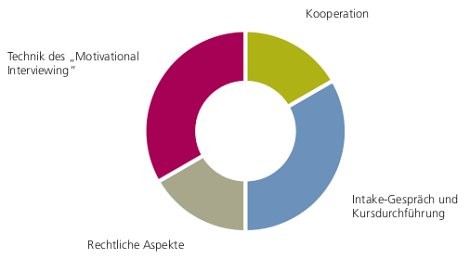



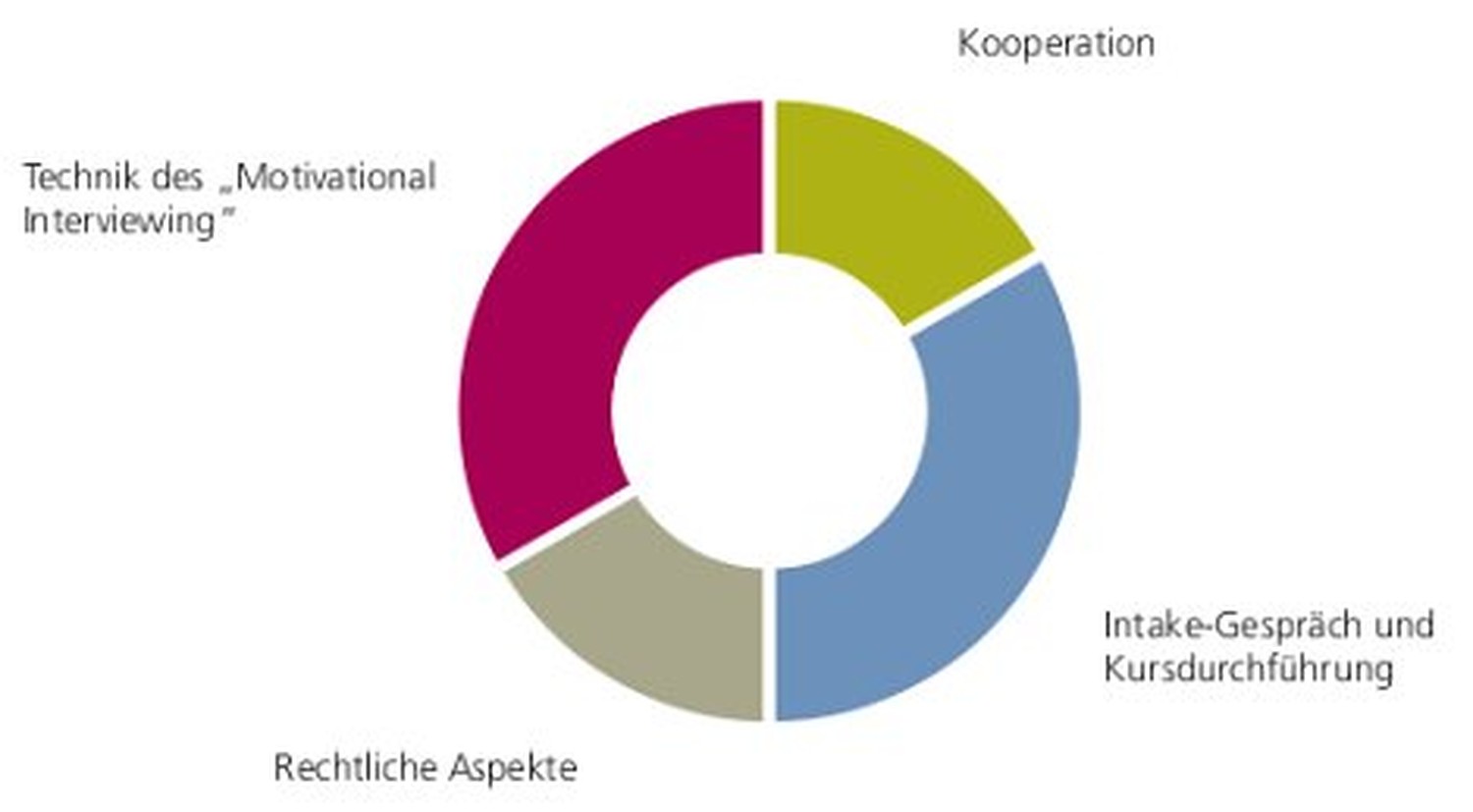
Contents of the trainer training
In the certificate training course, professionals receive information on the structure and process of the FreD programme, legal issues and the establishment of local cooperation structures. There is an in-depth look at the methodological principles, especially ‘motivational interviewing’. The specific implementation of the FreD intervention based on the FreD handbook is also discussed in detail – from the initial contact with the first-time drug user to the intake interview and the course itself.
The establishment of cooperation structures and course management place particular demands on FreD trainers. When communicating with such diverse actors as schools, regulatory authorities, youth welfare services, the police, the judiciary and employers, different views and motives must be taken into account in each case.
When dealing with young people, course leaders must understand their language and world, but at the same time be able to apply their sound theoretical knowledge appropriately – all with the aim of motivating young people to reflect on their own substance use behaviour.
If you have any questions about the current certificate courses, please feel free to contact us.